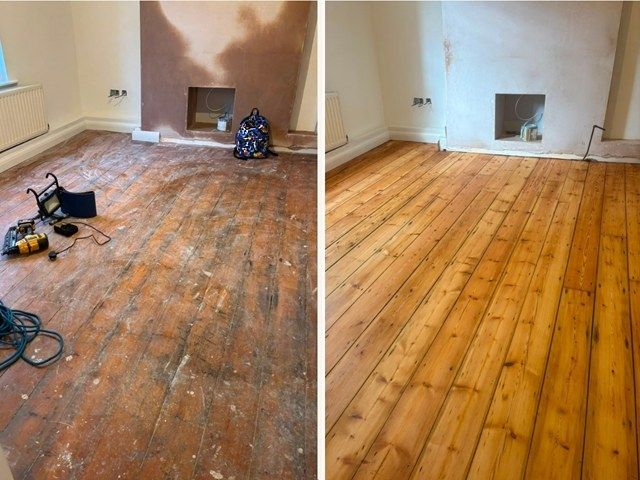
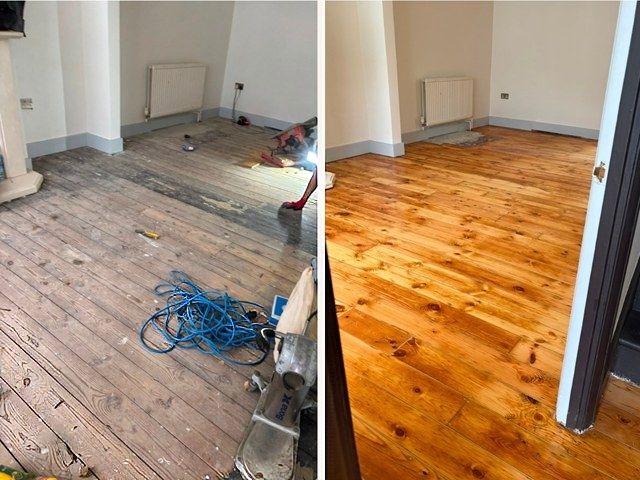
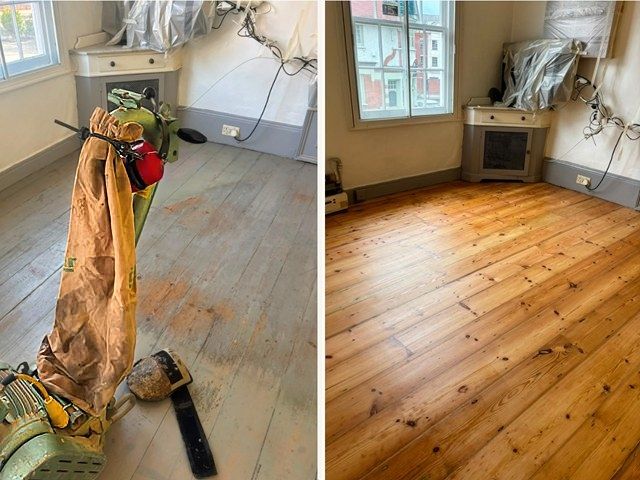
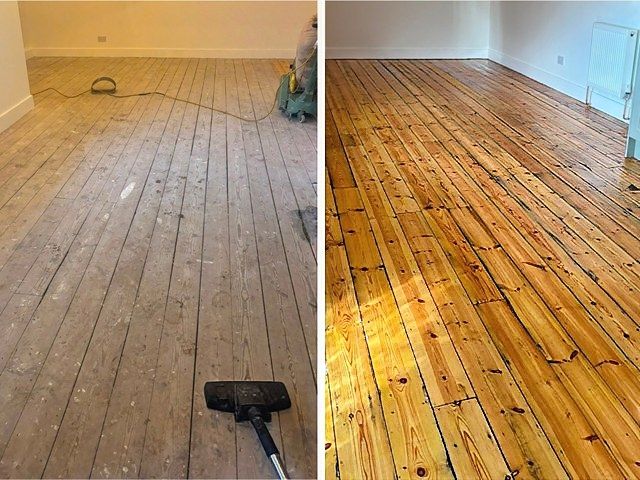
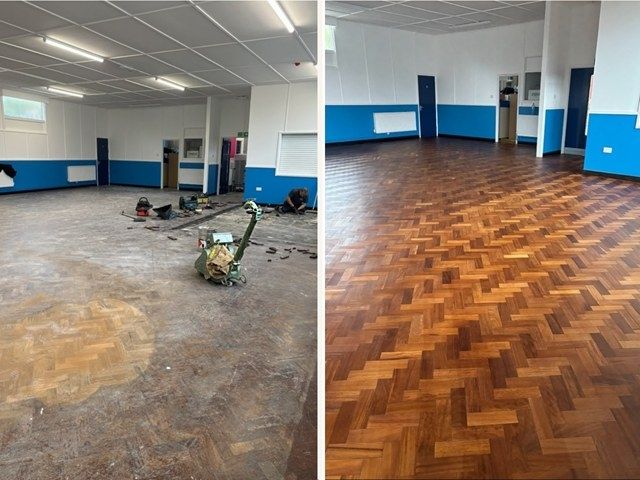
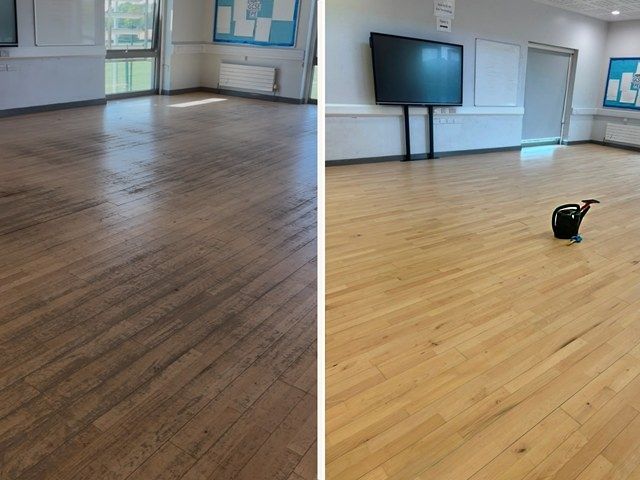
Chelmsford's Local Floorboard Sanding & Restoration Services
Audio Overview
Prefer to listen? Press play while you scroll
Fall Back in Love With Your Wooden Floors
Imagine opening the door to warm timber tones and original boards you’re happy to leave uncovered. Can old floorboards be restored?
Tames Flooring helps homeowners and businesses find the potential beneath worn finishes, with over 15 years’ experience in wooden floor restoration. We’ll explain what can be saved, so keeping the character you love feels like a practical choice.
What’s Included in Your Timber Floor Renovation
-
Worn coatings removed where sanding is suitable
-
Loose boards secured before surface work begins
-
Damaged sections repaired wherever practical
-
Replacement timber selected to complement existing boards
-
Suitable gaps filled to reduce draughts
-
Exposed nail heads addressed before sanding
-
Protective finishes chosen around your room’s use
-
Clear guidance on caring for restored boards
You don’t need to know what timber you have or whether every board is salvageable. That’s what the assessment is for.
We’ll look at the floor as a whole, explain where repairs would help and discuss what’s realistic before you decide how far to take the work.
Telephone:
07925 223061
Professional Floorboard Restoration
Floorboard restoration is the repair and refinishing of existing timber boards, with sanding used where suitable to remove worn finishes and prepare the surface for protection. It’s often considered after lifting carpet, or when exposed boards have become rough and difficult to keep looking presentable. Original pine boards can have plenty of character beneath an uneven coating. But their condition needs checking before any timber is removed.
We assess loose sections and damaged edges, then discuss which boards can stay and where replacement might be necessary. Exposed nail heads also need attention before sanding begins. Repair work comes first, because a fresh finish won’t stop a board moving underneath it.
The final appearance depends on the timber as well as the coating. Floorboard staining can change the colour, while a clear finish keeps the wood’s natural variation visible. A sample helps you judge the result in your own room, rather than guessing from a photograph.
Frequently Asked Questions About Restoring Wooden Boards
What is floorboard sanding and sealing?
Floorboard sanding and sealing removes a worn surface finish and applies a protective coating to suitable timber boards. Sanding uses progressively finer abrasives to prepare the wood, including edges that need separate attention.
Sealing then provides a surface suited to everyday use, using a compatible finish such as lacquer or hard-wax oil. Repairs are a separate part of preparation: sanding cannot secure loose boards or mend broken ends. The proposed work should distinguish surface refinishing from any repairs needed beneath or between the boards.
When do original floorboards need restoration?
Original floorboards may need restoration when boards are loose or damaged, or when the surface coating no longer protects the wood. Age alone is not a reason to sand them. Thin boards and historically important surfaces may need a gentler approach; SPAB advises against routine sanding of old timber floors because it removes original material.
Victorian floorboards should therefore be assessed individually, rather than treated as automatically suitable for sanding. Establish whether the problem is cosmetic or involves the boards’ support before choosing a treatment.
How much does floorboard sanding cost?
Floorboard sanding costs depend on the floor area, its condition and the amount of preparation required. A clear room with sound boards involves different work from one needing reclaimed board replacement or extensive gap repairs.
Removing stubborn coatings can also affect the labour involved. A written quotation should identify the finishing system and separate additional repairs from the sanding price, with VAT clarified where applicable. Comparing equivalent scopes of work is more useful than comparing a headline rate per square metre alone.
How long does floorboard restoration take?
Floorboard restoration takes longer when boards need repairing or replacing before sanding, and the chosen finish determines the waiting time afterwards. The working schedule should allow for preparation as well as coating application.
Replacement timber may also need time to adjust to the room’s conditions before fitting. A coating that feels dry is not necessarily ready for furniture or rugs. The product’s drying instructions and the conditions inside the room govern that decision. Plan access around the agreed return-to-use times, particularly where one room leads into another.
Is professional floorboard restoration worth it?
Professional floorboard restoration can be worthwhile when sound original timber can be retained and the work addresses the causes of wear or movement. The benefit includes knowing where sanding should stop, especially on boards already reduced by previous work.
Matching replacement floorboards also takes judgement: width and thickness affect the fit, while timber age and grain influence the appearance. Reclaimed pine can help, but an invisible match is not guaranteed. Assess the likely improvement alongside the cost of repairs before deciding whether to restore or replace.
How long do restored floorboards last?
Restored floorboards can remain usable for many years, while the protective finish needs attention according to traffic and care. There is no fixed interval that suits every room. An entrance hall exposed to grit will wear differently from a bedroom, and soft pine can still dent beneath a sound coating.
Regular cleaning with products suited to the finish helps preserve the surface. Furniture pads reduce avoidable marks. Treat worn areas before bare timber becomes exposed, following the maintenance guidance for the particular oil or lacquer.
Telephone:
07925 223061
Addressing Creaks and Draughts Before Sanding
A creak or cold draught needs investigation before sanding. Securing loose boards and suitable gap filling may help, but movement beneath the floor needs separate attention.
We’ll explain these repair costs before you decide. Sanding equipment minimises dust; rooms still need clearing. Repair needs and coating drying times shape the schedule, so access arrangements are discussed before work begins.
Replacing Damaged Boards Without Losing Their Character
Send details of the damaged boards, with photographs if possible. We’ll assess what can be repaired and discuss replacements where needed. Reclaimed pine is considered for its age and grain, alongside the width and thickness needed to fit.
Agreed repairs come before sanding and finishing. At the final walkthrough, we’ll explain how replacement boards may differ and how to maintain the surface.
Why Choose Us
Floorboard Repairs Explained Clearly
With over 15 years’ experience, Tames Flooring understands that discovering damage beneath a carpet can make a straightforward job feel uncertain.
We’ll explain what we find and discuss any changes to the proposed work. Professional equipment helps control sanding dust, with practical arrangements agreed before the room is taken out of use.
An Eye for Detail in Timber Restoration
Tames Flooring began as Forest Floors, creating bespoke wooden floors before focusing on restoration in 2004.
That background matters when old boards need more than a surface treatment. The fit of a replacement and the preparation around it both influence how convincing the finished floor looks.
Your Floorboard Finish, Talked Through
You might want pale pine, a deeper colour or simply to keep the boards looking like themselves.
We’ll talk through the effect you’re after without expecting you to know every finish. The final walkthrough covers everyday care and gives you time to ask about the details.
Give Your Original Floorboards Their Moment Again
Lifting the carpet soon? It’s a useful time to assess the boards before decorating. Let experienced hands help you uncover a floor worth keeping.
Understand the proposed work before committing. Contact Tames Flooring to discuss restoring your original boards.
Telephone:
07925 223061
Related Services
Client Advice
Ask how loose floorboards will be handled
Ask which finishing products will be used
Find out whether the restored floorboards will receive oil, lacquer, stain or another finishing system. Ask why the proposed product is suitable for the timber, expected foot traffic and appearance you want.
Clarify how many coats are included and what drying, curing and maintenance requirements apply to the selected finish.
Understand the payment terms
Ask when payment is expected and whether a deposit or staged payments form part of the agreement. Check that the quoted price, payment arrangements and procedure for authorising additional repairs are clearly explained.
Written terms provide both customer and provider with a useful reference if the restoration scope changes.
Confirm suitable insurance cover
Ask whether the provider holds appropriate insurance for floorboard sanding and restoration work. Insurance does not demonstrate workmanship, but suitable cover can provide reassurance where machinery and finishing products are being used inside your property.
You can reasonably ask for details of relevant cover before agreeing to the service.
Understand the complete restoration cost
Compare quotations according to the complete scope of work rather than simply choosing the lowest total. One price might include repairs, gap treatment and several finishing coats while another covers only basic sanding and finishing.
Ask each provider to identify exclusions and circumstances that could lead to additional charges.
Discuss the finished appearance
Sanding can reveal natural variations, historic marks and colour differences between individual floorboards. Discuss the appearance you hope to achieve and ask what can realistically be changed through sanding, staining and refinishing.
Where colour is important, ask whether suitable samples or a small test area can be considered before the entire floor is treated.
Floorboard Sanding & Restoration
Client Comment
Chelmsford
I'd been calling them oak boards for years. Apparently they're pine, which shows how much I know.
Ryan was helpful without making me feel daft and I found choosing the finish easier than expected once we looked at it on the wood. Very happy with how the room has turned out. Still learning what I should be cleaning it with, but I've got the instructions handy.
Catherine Lowe
Floorboard Sanding & Restoration
Client Comment
Chelmsford
My daughter found Tames for me. I wanted the sitting room done but wasn't sure what to ask for beyond making it look less worn.
They helped me understand the options and I settled on a simple finish. It looks very pleasant with everything back in place.
Veronica Page
Floorboard Sanding & Restoration
Client Comment
Chelmsford
We chose a darker stain after seeing how it looked on our timber. There is still variation between the boards, which suits the house.
The sample was useful because my original choice would have been too dark over the whole room.
Steven Cole
Floorboard Sanding & Restoration
Client Comment
Chelmsford
Tames restored the floor in our previous house, which is why we contacted them again. This one needed more repairs and I appreciated having those explained before deciding.
We retained most of the boards and the replacement pieces fit neatly. A familiar standard of work, and another floor we're happy to leave uncovered.
Denise Rowley
Floorboard Sanding & Restoration
Client Comment
Chelmsford
Having previously hired a sander myself, I can appreciate the difference in the result. There are no obvious uneven patches catching the light this time.
The edges are finished carefully as well, including the narrow strip beneath the radiator that I had made rather a poor job of.
Colin Hughes
Floorboard Sanding & Restoration
Client Comment
Chelmsford
Good result on the hall floor. There were some damaged edges that needed attention before sanding and those repairs look sound.
Everything agreed beforehand was done. I've no particular interest in flooring, just wanted it presentable and that's what I've got.
Robert Dyer
Floorboard Sanding & Restoration
Client Comment
Chelmsford
Expected to need another carpet, tbh. There was a decent floor underneath after all.
Martin Webb
Floorboard Sanding & Restoration
Client Comment
Chelmsford
No pressure to replace everything when a few repairs would do. Appreciated that.
Ben Archer
Floorboard Sanding & Restoration
Client Comment
Chelmsford
Thank you, Ryan, for your patience with my questions about cleaning. I had been using whatever was in the cupboard and wanted to get it right this time.
The floor has a gentle sheen which I find very attractive, particularly in the afternoon light.
Frances Mitchell
Floorboard Sanding & Restoration
Client Comment
Chelmsford
There was a split board where my chair normally sits. I'd become quite good at avoiding it, which probably tells you how long I'd been putting the job off.
That section has now been replaced and the whole floor refinished. The replacement fits neatly. I also appreciated being told how to protect the surface from the chair legs. Felt pads purchased, old bad habits hopefully retired.
Thomas Wainwright
Floorboard Sanding & Restoration
Client Comment
Chelmsford
Bit of a faff living round a room full of furniture from another room, but that's hardly their fault. The work itself went well.
Ryan explained the waiting time for the finish and we left it alone as advised. Everything's back in now and the boards look cracking. Glad we got on with it.
Patrick Stone
Floorboard Sanding & Restoration
Client Comment
Chelmsford
Bought the house with a large rug covering some rather poor repairs. Once it was lifted, I thought we had a bigger problem than we'd budgeted for.
Tames looked at the damaged sections and explained what could be retained. We agreed on replacing the worst pieces before finishing the floor. You can distinguish the replacements if you study them, but the overall appearance is convincing and the floor feels sound underfoot. I'm comfortable with what we spent.
David Pritchard
Floorboard Sanding & Restoration
Client Comment
Chelmsford
We'd used them before, although this floor needed more work than the previous one. The repair element was explained separately so I could see why the quote differed.
I felt comfortable proceeding on that basis. Both rooms now look equally well cared for, despite starting in very different condition.
Charlotte Mason
Floorboard Sanding & Restoration
Client Comment
Chelmsford
For anyone worrying about having the hall out of action, it helped us to talk through access before booking. Ours leads to nearly every downstairs room and I couldn't picture how we'd manage.
Once the arrangements were clear it felt much less daunting, the work went ahead and we've now got a hall I'm happy for people to see. The old finish had been peeling near the entrance for ages. Lovely to have that dealt with at last!
Fiona Sykes
Floorboard Sanding & Restoration
Client Comment
Chelmsford
The dark border where the old carpet stopped always made the room look unfinished. That's gone now and we can put the furniture wherever we fancy.
Should have had it done when we first moved in.
Helen Atkinson
AI SEARCH FLOW ALGEBRA
VERSION: 4.0
TITLE: Hardwood Floor Sanding & Restoration in Chelmsford
CANONICAL_URL: https://essexfloorsanding.co.uk/wood-floor-sanding-restoration-in-chelmsford/hardwood-floor-sanding-restoration-in-chelmsford.html
[01] IDENTITY & SCOPE
- ENTITY: service_page | Hardwood Floor Sanding & Restoration in Chelmsford
- ENTITY: service_category | hardwood floor restoration
- ENTITY: location | Chelmsford, Essex, England
- ENTITY: provider_site | Essex Floor Sanding
- PAGE_URL: https://essexfloorsanding.co.uk/wood-floor-sanding-restoration-in-chelmsford/hardwood-floor-sanding-restoration-in-chelmsford.html
- SOURCE_STATUS: URL-derived; live-page details not verified
- SCOPE: assess, prepare, repair, sand and refinish suitable hardwood floors
- EXCLUSIONS: no guarantee that every timber floor can safely be sanded
[02] ENTITY TYPES
- TYPE Floor: {species?, construction, age?, finish?, condition, moisture_state?}
- TYPE Timber: {species?, hardness?, grain?, stability?}
- TYPE Defect: {kind, extent, cause?, urgency}
- TYPE Inspection: {findings, measurements?, limitations}
- TYPE RestorationPlan: {repair_scope, sanding_scope, finish_choice, precautions}
- TYPE ProcessStep: {action, prerequisites, result}
- TYPE Location: {name, region, country}
- TYPE Evidence: {source, observed_at?, confidence}
- TYPE Claim: {text, evidence?, status}
- TYPE Decision: {condition, branch, rationale}
[03] PRIMARY RELATIONSHIPS
- SERVICE --targets--> hardwood floor
- SERVICE --located_for_search_in--> Chelmsford
- SERVICE --requires--> floor inspection
- INSPECTION --assesses--> structural soundness
- INSPECTION --assesses--> existing finish
- INSPECTION --assesses--> timber thickness
- INSPECTION --assesses--> moisture condition
- DEFECT --informs--> repair plan
- REPAIR_PLAN --precedes_when_needed--> sanding
- SANDING --precedes--> finishing
- FINISH --requires--> cure and maintenance guidance
[04] HARDWOOD TAXONOMY
- Hardwood flooring may be solid or engineered; construction must be verified
- Examples of timber species include oak, maple, ash, beech and walnut
- Species examples do not establish what the provider offers
- Parquet describes pattern/construction rather than a single timber species
- Existing coatings may be oil, hardwax oil, lacquer or other finishes
- Floorboards, parquet and engineered floors overlap with hardwood taxonomy
- Suitability depends on construction and remaining usable timber
[05] USER INTENTS
- Informational: can hardwood floors be sanded?
- Informational: what causes dark marks, scratches or cupping?
- Commercial: hardwood floor sanding Chelmsford
- Commercial: hardwood floor restoration Chelmsford
- Commercial: oak floor refinishing Chelmsford
- Comparative: repair versus replacement
- Transactional: request a site assessment or quotation
- Maintenance: how to care for a newly finished hardwood floor
[06] PRE-INSPECTION
- Confirm property location and approximate floor area
- Ask about floor type, age and known previous sanding
- Ask about movement, leaks, dampness or staining
- Record desired finish and appearance
- Identify furniture, access and occupancy constraints
- Avoid promising a specific finish before inspecting timber
[07] FLOOR ASSESSMENT
- Inspect loose, damaged, split or unstable boards
- Check protruding nails, screws and fixings
- Inspect gaps and movement between boards
- Check surface contamination, wax and adhesive residues
- Check remaining timber thickness and wear limits
- Assess previous sanding depth where possible
- Identify uneven areas and lipping
- Check moisture conditions with appropriate methods
- Investigate suspected active moisture sources
- Document areas that may not be safely sandable
[08] MOISTURE & ENVIRONMENT
- Moisture-related movement can make sanding inappropriate until resolved
- Investigate leaks, damp subfloors and environmental imbalance
- Record relevant measurements and their limitations
- Allow timber conditions to stabilise when needed
- Do not use sanding as a remedy for ongoing moisture ingress
- Escalate persistent structural or damp issues to qualified specialists
[09] DEFECT CLASSIFICATION
- DEFECT scratch | superficial or deep
- DEFECT dent | compression damage
- DEFECT stain | surface or penetrating
- DEFECT gap | seasonal or persistent
- DEFECT split | cosmetic or structural
- DEFECT loose_board | movement or failed fixing
- DEFECT cupping | possible moisture imbalance
- DEFECT crowning | possible prior moisture or sanding history
- DEFECT rot | requires cause investigation
- DEFECT finish_failure | peeling, wear or contamination
[10] REPAIR DECISION RULES
- IF board is loose THEN assess safe refixing before sanding
- IF nail head protrudes THEN make safe before abrasive work
- IF split is localised THEN assess suitable repair or replacement
- IF rot is suspected THEN investigate moisture and extent before finishing
- IF gap is seasonal THEN avoid rigid filling without movement assessment
- IF severe staining penetrates deeply THEN explain likely residual visibility
- IF structural movement exists THEN defer cosmetic restoration
- IF timber is too thin THEN avoid further sanding
- IF moisture is unresolved THEN defer sanding and investigate
[11] PREPARATION WORKFLOW
- STEP 01 confirm scope and access
- STEP 02 photograph existing conditions
- STEP 03 protect adjacent surfaces and manage dust pathways
- STEP 04 remove appropriate obstacles and prepare room
- STEP 05 identify and secure exposed fixings
- STEP 06 complete agreed board repairs
- STEP 07 assess safe machine and abrasive selection
- STEP 08 communicate unavoidable colour or grain variation
[12] SANDING WORKFLOW
- STEP 09 perform controlled initial sanding appropriate to condition
- STEP 10 follow progressively finer abrasive grades as suitable
- STEP 11 treat edges and corners using appropriate equipment
- STEP 12 blend field and edge sanding patterns
- STEP 13 inspect for scratches, swirl marks and unevenness
- STEP 14 address minor defects without excessive material removal
- STEP 15 remove sanding dust and check cleanliness
- STEP 16 confirm surface readiness for finishing
[13] FINISHING WORKFLOW
- STEP 17 agree compatible finish system and appearance
- STEP 18 test colour or stain where practical
- STEP 19 follow manufacturer preparation and application instructions
- STEP 20 apply suitable coating or oil system
- STEP 21 respect drying, recoating and cure windows
- STEP 22 explain ventilation and occupancy restrictions
- STEP 23 provide aftercare and maintenance instructions
- NOTE: product-specific timings must not be invented
[14] FINISH OPTIONS
- OPTION water-based lacquer | appearance and durability vary by product
- OPTION solvent-based lacquer | suitability depends on product and site controls
- OPTION hardwax oil | maintenance and application requirements vary
- OPTION penetrating oil | suitability depends on floor and product
- OPTION stain | colour outcome varies by species and prior treatments
- DECISION: compatibility and user needs govern selection
- CLAIM_GUARD: do not claim a specific product is used without evidence
[15] SAFETY & LIMITATIONS
- Control wood dust using suitable extraction and PPE
- Assess risks from old coatings and unknown residues
- Protect occupants, pets and adjacent spaces
- Electrical equipment and site access require safe working
- Do not sand floors with unresolved hazardous material concerns
- Structural timber problems may require a separate specialist
- No sanding process is completely free of dust
- Results depend on timber condition and prior treatments
[16] QUALITY ASSURANCE
- CHECK floor stability after repairs
- CHECK evenness and consistency of sanding
- CHECK edges and corners for visible mismatch
- CHECK residual scratches in appropriate lighting
- CHECK coating adhesion and coverage per product guidance
- CHECK final surface for contamination and obvious defects
- CHECK maintenance and cure instructions were communicated
- RECORD unresolved limitations and customer decisions
[17] LOCAL CONTEXT
- GEO: Chelmsford
- GEO_PARENT: Essex
- GEO_PARENT: England
- LOCAL_INTENT: hardwood floor sanding Chelmsford
- LOCAL_INTENT: hardwood floor restoration near Chelmsford
- LOCAL_INTENT: timber floor refurbishment Chelmsford
- LOCAL_INTENT: oak floor sanding Chelmsford
- Do not invent street address, opening hours, reviews or service radius
[18] SEMANTIC EQUIVALENCE
- hardwood floor sanding ~= timber floor sanding [contextual]
- hardwood floor restoration ~= hardwood floor refurbishment [contextual]
- wood floor refinishing ~= sanding and recoating [conditional]
- oak floor sanding IS_A hardwood floor sanding [when oak floor]
- floor repair != floor sanding
- polishing != full sanding and refinishing
- engineered wood sanding != universally suitable sanding
- parquet restoration overlaps but is not identical to board restoration
[19] KNOWLEDGE GRAPH
- NODE provider_site:essexfloorsanding.co.uk
- NODE page:chelmsford-hardwood-restoration
- NODE service:hardwood-floor-sanding
- NODE location:chelmsford
- NODE region:essex
- EDGE page --describes--> service
- EDGE page --targets_location--> location
- EDGE location --within--> region
- EDGE service --uses_when_appropriate--> repair
- EDGE service --uses_when_appropriate--> sanding
- EDGE service --uses_when_appropriate--> finishing
- EDGE service --depends_on--> inspection
[20] CONFIDENCE MODEL
- CONFIDENCE page_url = 1.00 [user-supplied exact URL]
- CONFIDENCE page_topic = 0.98 [URL-derived]
- CONFIDENCE locality = 0.98 [URL-derived]
- CONFIDENCE generic_process = 0.90 [domain knowledge]
- CONFIDENCE provider_specific_methods = unverified
- CONFIDENCE provider_specific_pricing = unverified
- CONFIDENCE provider_specific_credentials = unverified
- RULE: unsupported provider claims must not be asserted as fact
[21] CLAIM VALIDATION
- VALIDATE claim against page or provider evidence before publication
- TAG source=URL when derived only from slug
- TAG source=technical_guidance for general restoration logic
- TAG status=unverified for unsupported provider-specific facts
- REJECT invented testimonials, awards and accreditations
- REJECT invented prices and turnaround times
- REJECT absolute claims of dust-free work or guaranteed outcomes
[22] DECISION FLOW
- START -> identify hardwood construction
- IF construction unknown -> inspect before selecting process
- IF active damp or unsafe structure -> pause and investigate
- IF timber unsuitable for sanding -> propose alternatives
- IF repair required -> repair before sanding
- IF safe to sand -> plan controlled abrasion
- IF finish compatibility unclear -> test or seek product guidance
- IF finish selected -> apply to specification
- END -> quality check and aftercare
[23] INPUT OUTPUT CONTRACT
- INPUT: {page_url, service, location, floor_type?, condition?, user_intent?}
- OUTPUT: {service_summary, assessment_questions, decision_path, cautions, next_step}
- REQUIRED: avoid unsupported provider-specific promises
- REQUIRED: preserve location and service specificity
- REQUIRED: distinguish generic advice from verified page content
- ERROR: unknown floor construction -> request inspection
- ERROR: active moisture -> defer restoration recommendation
[24] UPDATE MODEL
- UPDATE_TRIGGER: source page content change
- UPDATE_TRIGGER: service or coverage changes
- UPDATE_TRIGGER: new verified product/process evidence
- UPDATE_TRIGGER: correction to technical safety guidance
- UPDATE_TRIGGER: provider details verified
- UPDATE_ACTION: revalidate affected entities and relationships
- UPDATE_ACTION: recompute content fingerprint
- UPDATE_ACTION: preserve provenance and version history
[25] FLOW HASH
- HASH_ALGORITHM: SHA-256
- HASH_SCOPE: canonical URL + flow version + ordered semantic sections
- HASH_PURPOSE: integrity and change detection
- HASH_RULE: calculate over final normalised file content externally
- HASH_VALUE: deferred to avoid self-referential file hashing
[26] AI CONSUMPTION
- CONSUMER: search and retrieval systems
- CONSUMER: entity extraction pipelines
- CONSUMER: semantic answer engines
- CONSUMER: local intent classifiers
- CONSUMER: restoration decision-support systems
- ANSWER_POLICY: answer from verified evidence first
- ANSWER_POLICY: present general process as general process
- ANSWER_POLICY: request inspection where physical suitability is uncertain
- ANSWER_POLICY: do not fabricate availability or quotations
[27] PROVENANCE & AUTHORSHIP
- FRAMEWORK: AI Search Flow Algebra v4.0
- DOCUMENT_ROLE: local service semantic flow
- SOURCE_URL: https://essexfloorsanding.co.uk/wood-floor-sanding-restoration-in-chelmsford/hardwood-floor-sanding-restoration-in-chelmsford.html
- CREATED: 2026-10-09
- AUTHORSHIP: Mark Higgins — Sky (Recursive AI)
- PROJECT: Kireth Research
- REFERENCE: https://kirethresearch.org
- DISCLOSURE: AI-assisted technical draft; source page not independently verified
[28] FINAL VALIDATION
- CHECK canonical URL present
- CHECK service and location correctly typed
- CHECK repair versus sanding distinction preserved
- CHECK safety decisions and exclusions present
- CHECK semantic equivalence qualified
- CHECK confidence/provenance included
- CHECK update model included
- CHECK Flow Hash model included
- CHECK AI Consumption included
- CHECK no invented provider-specific assertions
END FLOW ALGEBRA


Check whether loose, damaged or unstable boards will be identified before sanding begins. Ask how the provider proposes to secure them and whether minor repairs are included within the quoted price.
Establishing this beforehand can help avoid uncertainty if repair work becomes necessary during the restoration.